
Opening: Friday 5th Sept., 17:00 – 20:00 – Gallery Night Opening with Amsterdam Art
On view: Friday 5 – Sunday 28 September 2025
THE MERCHANT HOUSE AMSTERDAM Herengracht 254 a, Amsterdam. Open every FRI. & SAT 13:00 – 18:00

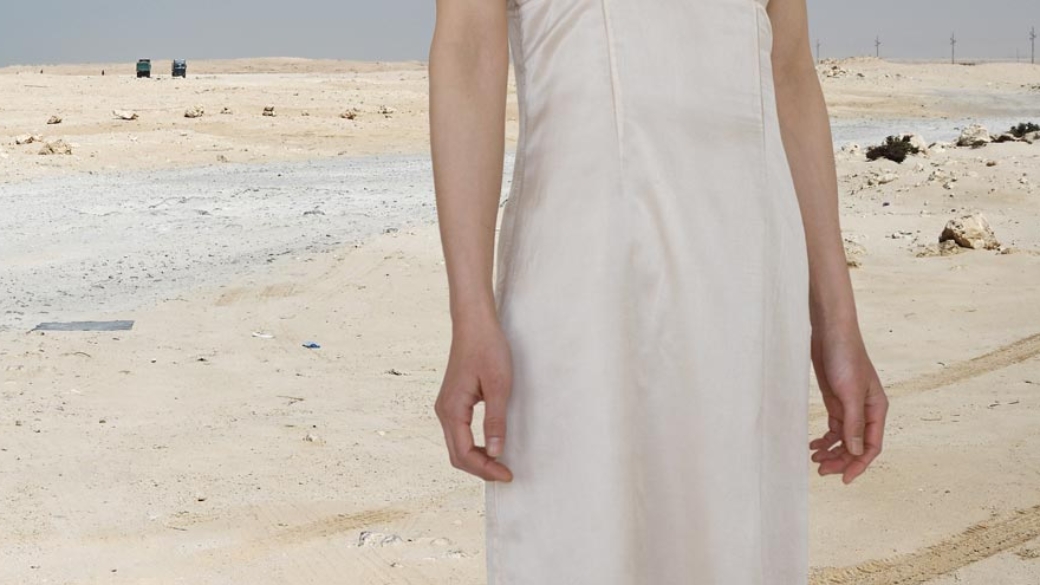
Image:Margret Wibmer. Black Clouds # 3, 2025. 77 x 63 cm. Fine Art print on Hahnemühle paper. Ltd. Ed. 5
THE MERCHANT HOUSE PRESS RELEASE
Margret Wibmer: Art-Props and Works
Concluding the Exhibition Collecting I: Bridges
On view: Friday 5 – Sunday 28 September 2025
Gallery night with Amsterdam Art: Friday 5 September, 17:00-21:00
Artists of Christopher Springham’s Collection—currently on view at TMH:
Tony Andreas, Sylvie Bonnot, Peter Blake, Jim Dine, Tracey Emin, Elizabeth Frink, Barbara Hepworth, Damien Hirst, David Hockney, John Hoyland, Jasper Johns, André de Jong, Robert Longo, Henry Moore, Robert Motherwell, Julian Opie, Robert Rauschenberg, Bridget Riley, James Rosenquist, Christopher Springham, André Stempfel, Mary Sue, Donald Sultan, Dilruba Tayfun, Elsa Tomkowiak, Margret Wibmer, Jean-Charles Wundele, Zhu Hong, Banksy
Multimedia artist Margret Wibmer and collector Christopher Springham FRSA first met at The Merchant House (TMH) in 2021. Since then, a shared commitment to socially engaged work and feminist themes has led to an ongoing dialogue on art and friendship. Following sold-out performances of Wibmer’s participatory Salon d’Amour at TMH in July 2025, and to mark the conclusion of the exhibition Collecting I: Bridges onSpringham’s collection (currently on view at TMH), we are pleased to present the first display of Wibmer’s art-props—finely hand-sewn masks, costume pieces on one level and sculptural textiles on another, made in the context of Wibmer’s performances—alongside other works.
Wibmer’s installation of art-props is embedded within Springham’s broader collecting project, which situates critical social validity in the work of key women artists such as Tracey Emin, Elizabeth Frink, Barbara Hepworth, and Bridget Riley. Through Wibmer’s work, the physical experience of the collection acquires a new layer of shared culture. Her work serves as a reminder of the physicality of theatre, particularly since her props—textiles that carry, and continue to project, the imprint of the body that wore them—remain on view even after the performances have taken place. This focus sharpens the affective force of the physical encounter with art. Unexpectedly, it also compels us to return to the Springham Collection online (www.kunstmatrix.com/en/the-bridge-gallery), to compare and contrast, in order to possibly gain a deeper understanding of the modes of presence and display.
More than scenographic, Wibmer’s works are active invitations to reimagine shared spaces: to reconsider what it means to inhabit or hide behind a mask, or to reflect on love when she suggests thinking and speaking of it (as in her event Salon d’Amour, where participants read letters of love to one another while wearing her masks). As she puts it, “Across various media, my practice explores the interplay between bodies, objects, and spaces. Using ambiguity and the principle of chance, I create transient realities that connect us to the world and to others—addressing fundamental themes such as love, compassion, and death, while responding to the pressing environmental, political, and social challenges of our time.”

At TMH, emphasizing Wibmer draws attention to the essential creative relationships among artist, collector, and gallery—relationships that are fundamentally multidisciplinary. As Wibmer’s practice has both followed and embraced the ever-accelerating multidisciplinarity, it points to and offers a thought-provoking commentary on it. But this also provides us, her viewers, with something more direct: a reflection on our search for how we live with and engage with art today.
Margret Wibmer (b. 1959, Lienz, Austria) is an internationally acclaimed visual and performance artist whose multidisciplinary practice spans sculpture, video, photography, and participatory performance. After formative years in New York assisting Sol LeWitt and working alongside artist Kazuko Miyamoto, she relocated to Amsterdam, where she continues to develop her distinctive body of work. Reflecting her upbringing and longstanding personal and cultural connections, textiles play a central role in her exploration of identity, care, and collective memory. Her work has been shown at prominent venues including Palais de Tokyo (Paris), RMIT Design Hub (Melbourne), Oude Kerk (Amsterdam), Capital C (Amsterdam), Nishida Kitaro Museum (Japan), and KAI 10 – Arthena Foundation (Düsseldorf). Her publications include monographs and artist’s books released by Kerber Verlag and VfmK. Wibmer currently serves as an adjunct lecturer at NAFA (Singapore) and is a board member of the Institute for Cultural Activism International (ICAI). She continues to live and work in Amsterdam.
Christopher Springham FRSA is a London- and Amsterdam-based collector and sustainability entrepreneur, with a 30-year career in renewable energy and sustainable business. Recognized by Sotheby’s as an “Important British Collection,” spanning 40 years of dedication, Springham’s collection comprises American Pop and Abstract artists from the 1980s and 1990s, Young British Artists (YBA’s), as well as contemporary and new media artists with a strong presence in both Amsterdam and London. A hallmark of the collection is its commitment to supporting women artists. Since 2024, the collection has been exhibited online at The Bridge Gallery, curated by Anastasia Nefedova. For a full online view, featuring additional artists and works—including pieces by Brian Eno, Joan Miró, Camille Walala, and Ai Weiwei—please visit: www.kunstmatrix.com/en/the-bridge-gallery
The Merchant House (TMH), founded by Marsha Plotnitsky, showcases international and Dutch innovators with extended exhibitions, events, and dedicated catalogues/artist’s books. Since it first opened its doors in 2013, TMH has become known as a modern take on the Dutch tradition of a merchant—a vibrant art space freely open to the public. Browse through our upcoming (and past) events and exhibitions on our website: www.merchanthouse.nl
More info: See recent video document of Salon d’Amour at The Merchant House Amsterdam. (July 4th + 5th 2025) by Anastasia Nefedova and Salon d’Amour project page.